 Garbamons
PURA: Teen Researchers Combine Cold Plasma and Photocatalysis to Attack Water Pollutants and Antibiotic Resistance
PURA combines cold plasma and photocatalysis in a student-built treatment concept aimed at pollutants and antibiotic-resistant bacteria.
The idea in one sentence
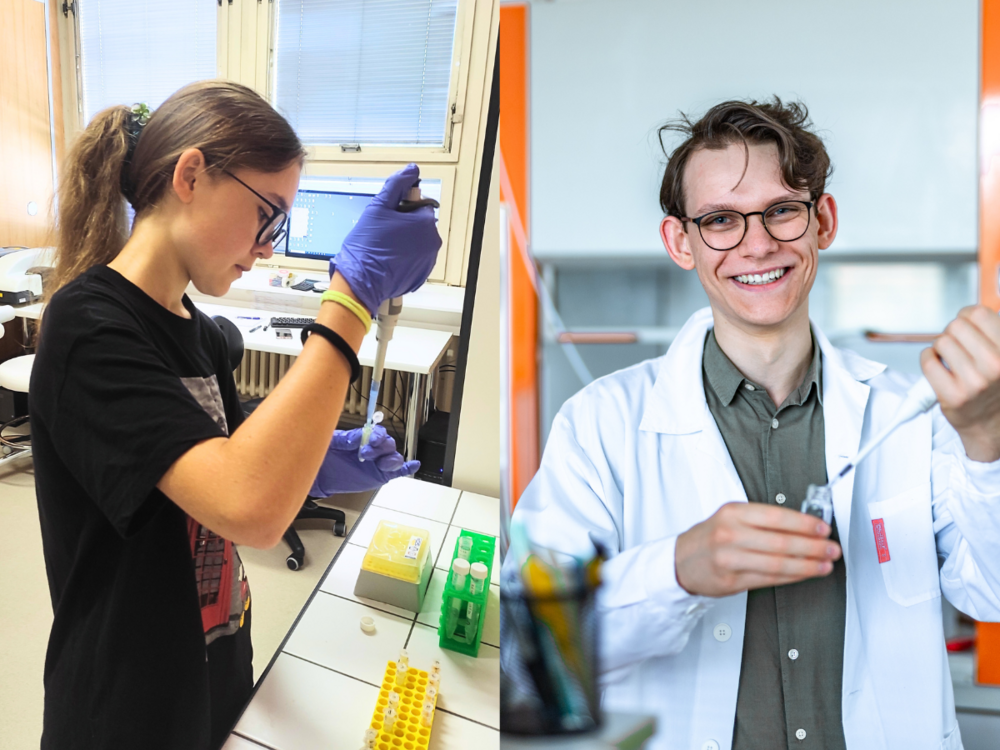
PURA is a two-stage water-treatment concept that merges cold plasma with photocatalysis . Tomáš Čermák brought experience with AC-corona plasma, while Anna Podmanická brought research on photocatalytic water purification. Their central innovation was to integrate the two approaches into one treatment sequence aimed at destroying pollutants and antibiotic-resistant bacteria rather than merely trapping them.
Why this problem is difficult
Wastewater can carry a complex mixture of pharmaceuticals, antibiotic residues, resistant bacteria, organic chemicals and conventional contaminants. Hospitals, farms and industrial facilities are especially important sources. Conventional wastewater treatment was not originally designed to remove every trace organic molecule or eliminate all antibiotic-resistance risks. Some contaminants persist through treatment, while sub-lethal exposure to antibiotics and other stressors can create conditions in which resistant organisms and resistance genes remain environmentally relevant.
PURA therefore targets a class of contaminants that can require advanced oxidation or other tertiary treatment. Instead of adding a single disinfectant, the design uses highly reactive chemical species generated by plasma and light-driven catalytic reactions.
How the two technologies work
1. Cold plasma / AC corona.
Cold plasma is an ionized gas in which electrons can be highly energetic even though the bulk gas remains comparatively cool. In water-treatment systems, electrical discharges can generate reactive oxygen and nitrogen species. Depending on the reactor configuration, these may include ozone, hydroxyl radicals, hydrogen peroxide and other short-lived oxidants. Such species can damage microbial cell components and break chemical pollutants into smaller molecules.
Čermák's contribution, according to The Earth Prize and Czech Academy material, derives from his work using cold plasma, specifically AC corona, to destroy pollutants and antibiotic-resistant bacteria.
2. Photocatalysis.
Photocatalysis uses light to activate a catalyst. In common water-treatment research, semiconductor catalysts absorb photons and generate electron-hole pairs, which can form reactive species capable of oxidizing organic compounds. Anna Podmanická had been studying water purification through photocatalysis before joining forces with Čermák.
3. The PURA integration.
The project combines those two treatment modes into a sequential system. The intention is to exploit complementary chemistry: plasma generates reactive species and attacks contaminants, while photocatalysis provides a second light-driven oxidation stage. The Earth Prize describes the combination as a novel two-step system and says the early prototypes can purify small quantities of water.
Who are the inventors?
At the 2025 Earth Prize, Tomáš Čermák was 18 and Anna Podmanická was 19. Čermák was described as the first high-school researcher at the Institute of Plasma Physics of the Czech Academy of Sciences. Podmanická was described as a prize-winning Slovak young scientist who had been selected for a University of Oxford summer programme. The project connected students from Gymnázium Hradec Králové in Czechia and Gymnázium Jura Hronca in Slovakia.
The partnership is technically meaningful because the two students did not simply divide business and engineering responsibilities; they merged two lines of scientific work that each had an independent research history.
What had been demonstrated by 2025
The Earth Prize reported that early PURA prototypes had shown the ability to purify small quantities of water and framed the technology as suitable for eventual household-scale use. The team then began working on a next-generation prototype intended to treat "dozens of litres" of water. The longer-term ambition is integration into wastewater-treatment plants so that pharmaceutical pollution and resistant organisms can be attacked closer to their source.
Public descriptions emphasize effectiveness, energy efficiency and potential cost advantages. However, the sources reviewed for this article do not publish a full experimental dataset with contaminant concentrations, microbial log-reduction values, energy per cubic metre, catalyst identity, plasma power, hydraulic residence time, by-product analysis or long-term durability. Those missing parameters matter greatly for comparing PURA with ozone, UV/H 2 O 2 , activated carbon, membrane processes and other advanced treatment technologies.
Why the combination could be scientifically useful
Advanced oxidation systems often face trade-offs. A process may rapidly inactivate microbes but consume a lot of energy; another may degrade selected organic contaminants but perform more slowly in complex wastewater. A hybrid system can potentially improve treatment by attacking contaminants through multiple pathways. Plasma can also modify catalyst surfaces or produce oxidants that continue reacting after the electrical discharge zone, while photocatalysis can sustain oxidation under illumination.
That does not automatically make a hybrid system better. Integration adds complexity, electrical hardware, reactor-design challenges and safety requirements. PURA's engineering case will ultimately depend on whether the combined system produces a measurable treatment benefit that justifies the extra components.
Recognition and funding
The Earth Prize's overall competition pool is described as US$100,000 in shared funding. The clearly documented PURA team amount in the official materials used here is the regional US$12,500 award; this article does not assume that the entire competition pool went to PURA.
- 2025: PURA became The Earth Prize's European Regional Winner and received US$12,500 to develop the solution.
- 22 April 2025: PURA was named Global Winner of The Earth Prize 2025 after a public vote involving nearly 16,000 voters.
- 2026: Tomáš Čermák was selected for Forbes Czechia's 30 Under 30, with PURA cited among his achievements.
- April 2026: Czech business newspaper Hospodářské noviny highlighted Čermák and Podmanická in its 2026 innovators coverage and sustainability-innovation recognition.
What needs to happen before PURA can be judged as a treatment technology
- Publish quantitative performance: removal percentages for named pharmaceuticals and pollutants; bacterial log reductions; antibiotic-resistance indicators.
- Measure energy intensity: plasma can be energy intensive, so kWh per cubic metre is a key commercialization metric.
- Characterize transformation products: oxidizing a pollutant can create intermediate compounds that must also be assessed for toxicity.
- Test real wastewater: laboratory water is much easier to treat than wastewater containing natural organic matter, salts, suspended solids and diverse microbes.
- Evaluate catalyst life: photocatalysts can foul or lose activity, especially in complex water matrices.
- Demonstrate scale-up: plasma reactors that work in small chambers can behave differently when flow rate and electrode dimensions increase.
Why PURA is worth watching
PURA stands out among youth environmental projects because it is based on advanced treatment chemistry rather than a purely mechanical cleanup device. It also targets antimicrobial resistance, a problem that sits at the intersection of environmental engineering and public health. The most important next step is not another award: it is publication of reproducible engineering data showing exactly how much contamination the system removes, at what energy and material cost, and with what by-products.
Evidence note
Verification note: The "novel" or "entirely new" characterization of the plasma-photocatalysis combination is an Earth Prize description of the team's integrated product. A formal global patent/literature novelty search was not available in the public project materials, so that wording should not be treated as a legal novelty determination.
Sources
- The Earth Prize , official Global Winner announcement
Official competition announcement, project description, or media resource. (LINK_ONLY)
- The Earth Prize , PURA media kit, team and prototype images
Official competition announcement, project description, or media resource. (LINK_ONLY)
- Czech Academy of Sciences , official press release
Reported profile or project reference supplied with the research draft. (LINK_ONLY)
- Euronews , interview/profile of the PURA duo and technical concept
Reported profile or project reference supplied with the research draft. (LINK_ONLY)
- The Earth Prize , 2026 update on Tomáš Čermák / Forbes Czechia 30 Under 30
Official competition announcement, project description, or media resource. (LINK_ONLY)
- Hospodářské noviny , 2026 innovators coverage
Reported profile or project reference supplied with the research draft. (LINK_ONLY)